Project
My kids love games where a hole in the ground swallows everything in a city and keeps getting bigger. Gobble is my attempt to turn that feeling into practice time. The hole still eats cones, cars, trees and buildings, but some tiles on the map carry a lesson: the multiples of 5, the next letter in a word, the sums that make 12. Eat the right ones and you grow. Eat a wrong one and it bounces off, and the game tells you why.
At a glance
- What it is: a private learning game for my kids, played on a tablet at home
- Where the idea comes from: the hole-swallows-the-city genre, made popular by hole.io (Voodoo) and Donut County (Ben Esposito / Annapurna Interactive). Gobble is my own take on that idea for teaching, not a copy, and it is not connected to either game or company.
- Not playable here: the game is for home use only and is not published on this site or anywhere else
- Built with: AI coding agents, plain JavaScript and the open-source three.js library. Every model, texture and sound is made in code: no downloaded art, no accounts, no network, nothing leaves the tablet
How a round works
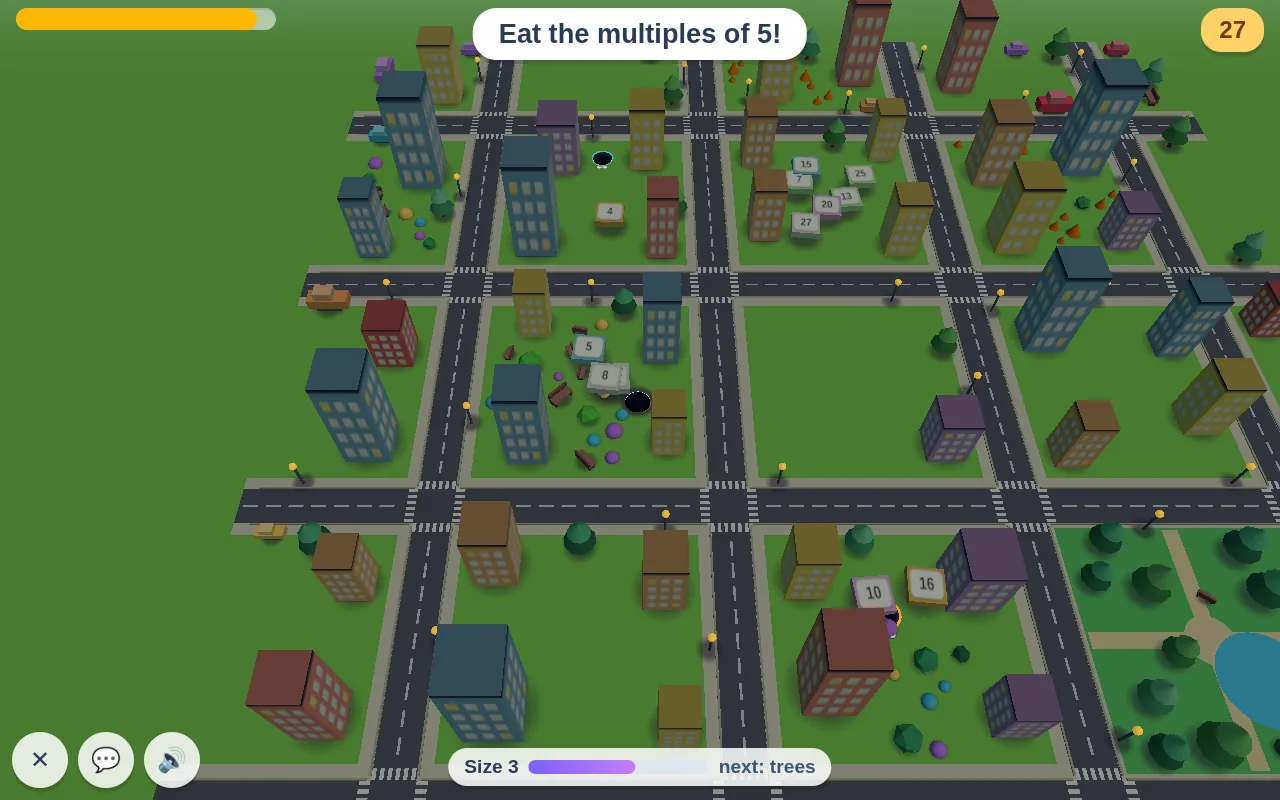
- Drag to move. The hole glides toward your finger and swallows anything small enough to fit. Growing unlocks bigger things: benches, then cars, then trees, and finally whole buildings.
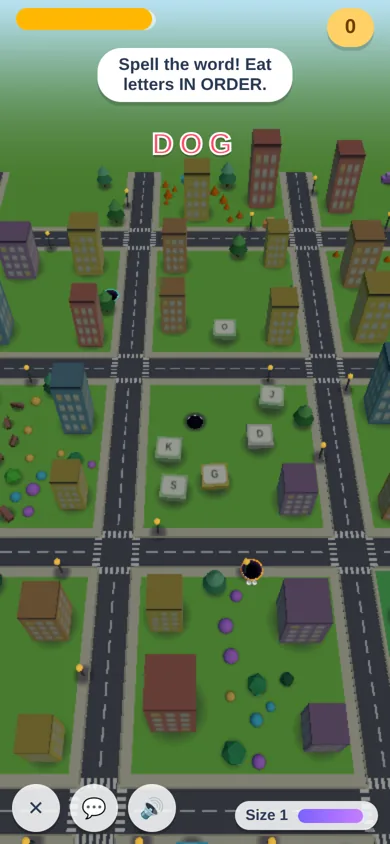
- The lesson is the gate. Lesson tiles can always be eaten, whatever their size. What matters is whether the answer is right. There are four subjects: times tables, division (pick the true equations), spelling (eat the letters in order) and addition.
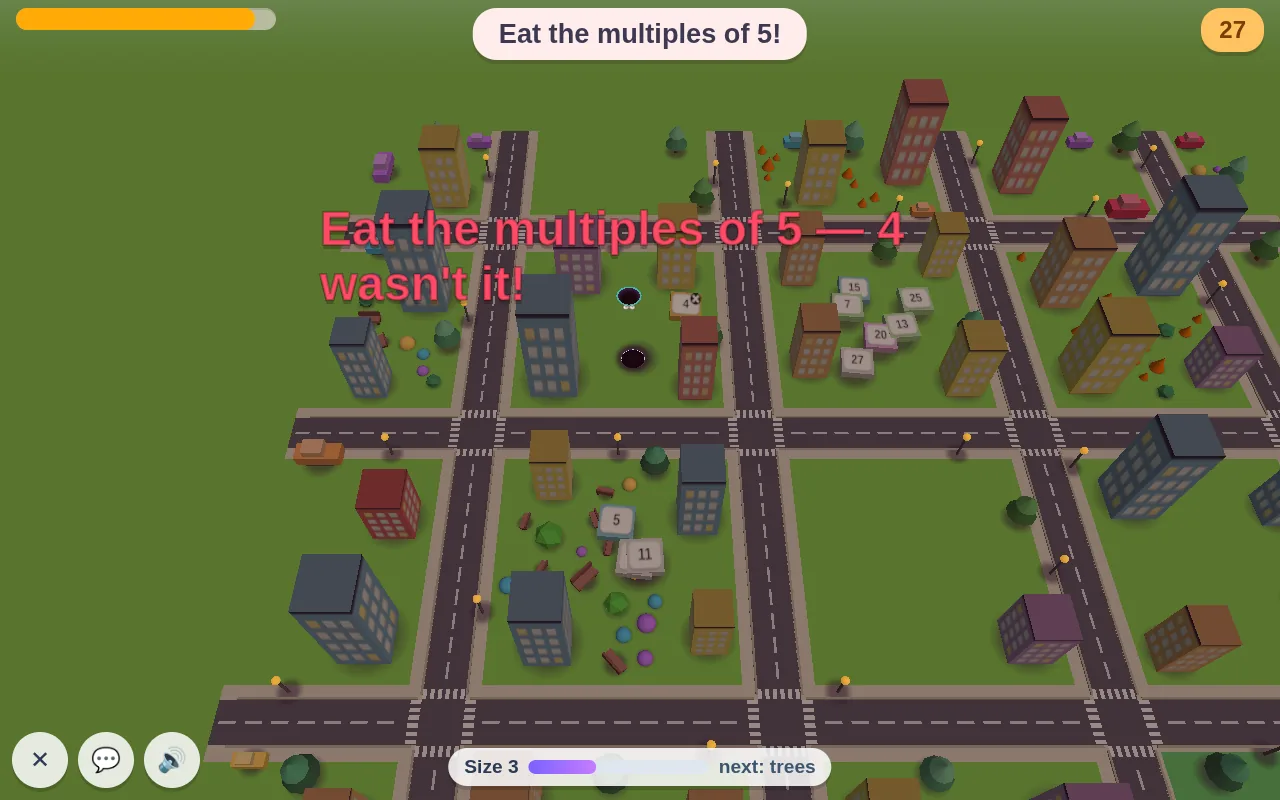
- Wrong answers teach. A wrong tile bounces back out with a cross on it, the hole shrinks a little, and the game says the rule out loud: “Eat the multiples of 5 — 4 wasn't it!”
- Read aloud. Prompts, spelling letters and feedback are spoken, so a child who can't read yet can still play.
An endless town and a gem shop
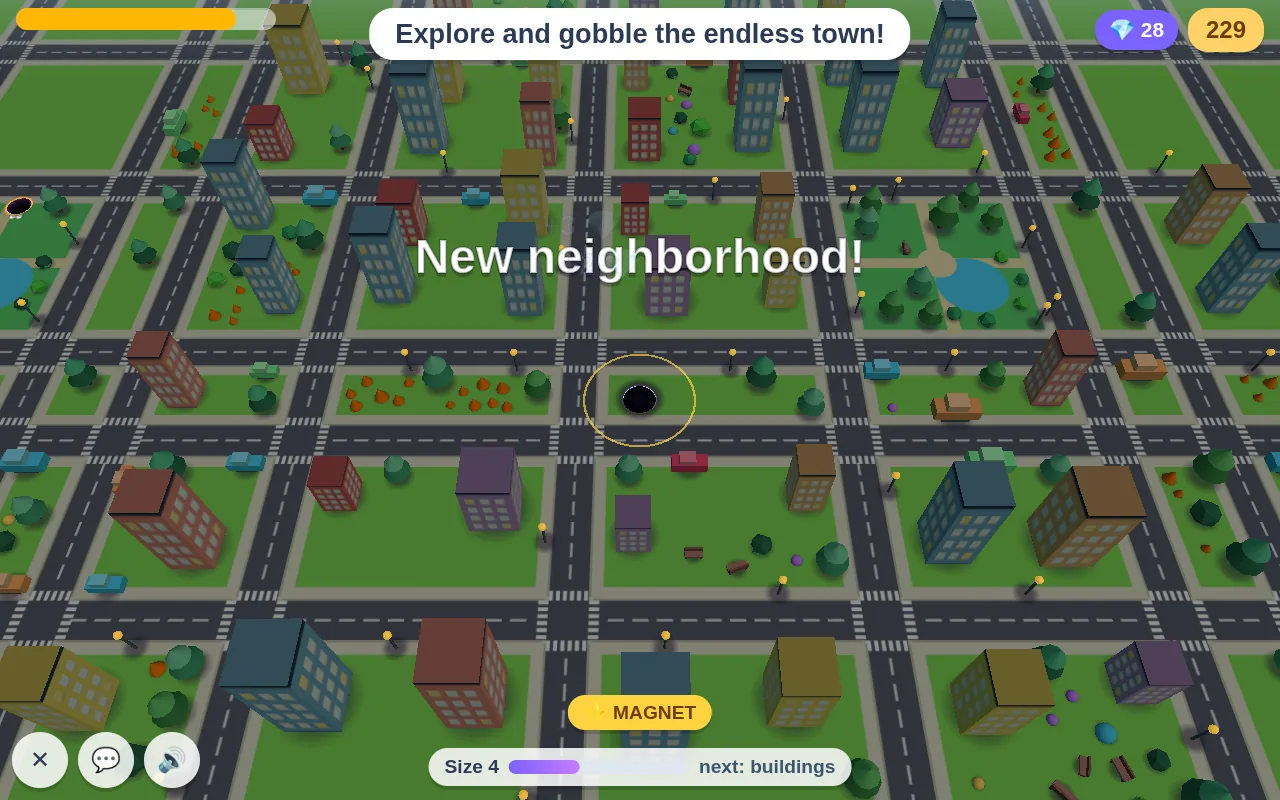
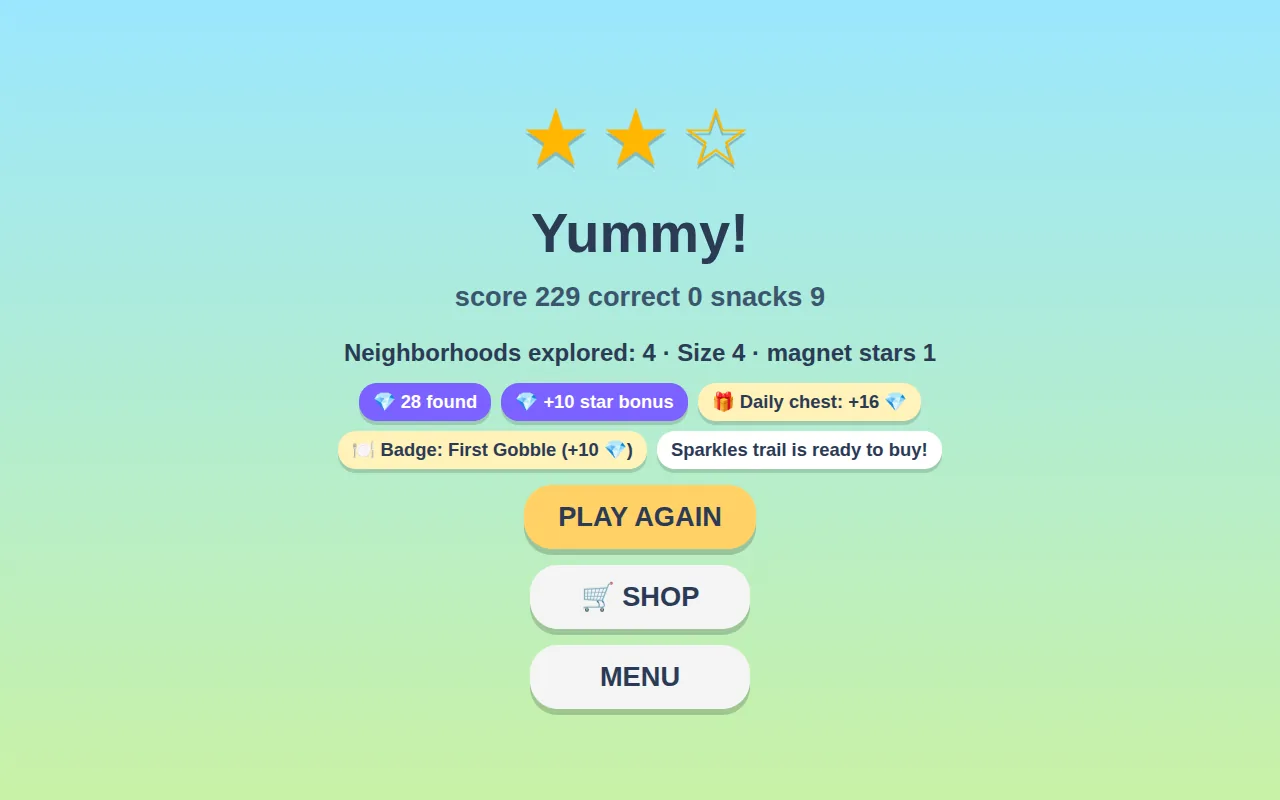
The latest version has no edge. The town is generated in blocks as you drive, each one built from a fixed seed so a place you return to is the same place. A “neighborhoods explored” count replaces the old “percent of the town eaten” score. To give the kids something to save for, the game now has a gem economy, shaped by what research says about rewards and children:
- Gems arrive as surprises. Buildings sometimes pop gems when eaten; rivals, magnet stars, level-ups and new neighborhoods pay out too. Studies going back to Lepper's 1973 experiment find that rewards children expect can dull their interest in an activity, while unexpected ones don't, so gems are mostly found rather than priced per bite.
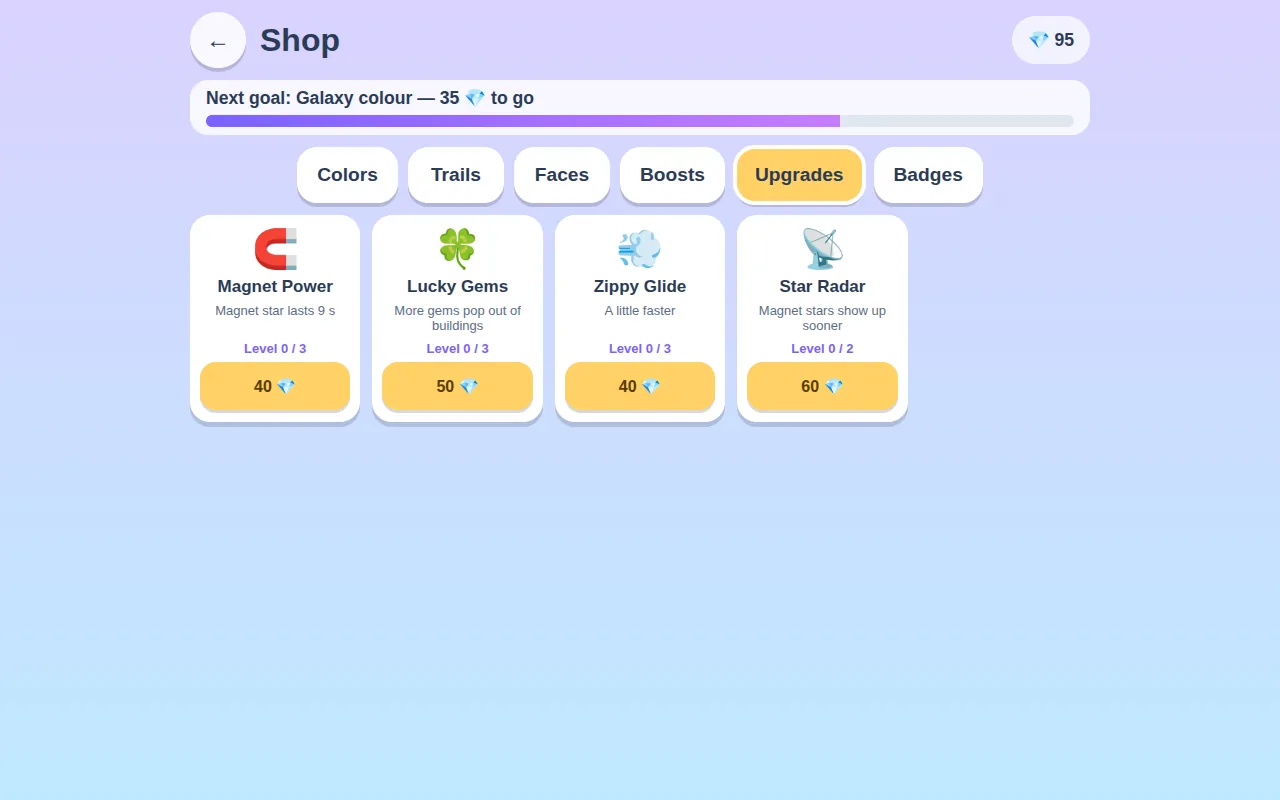
- A shop with long and short goals. Hole colours, trails and faces are cosmetic only and cost 25 to 220 gems. Small boosts (a bigger start, extra time, double gems) and permanent upgrades (longer magnet, luckier gems, a quicker glide) give gems a use. A “next goal” bar shows how far away the next thing is, so saving up is part of the fun.
- Badges name what you did. “Explorer”, “Rival Roundup” and “Word Wizard” recognize an achievement and never set a target. Streaks pause instead of resetting if a day is missed.
- Game money only. Gems can't be bought and there is no real money anywhere. Players' gems stay on the tablet, saved only after a grown-up taps yes.
What I borrowed from the genre (and from older learning games)
Before the latest round of changes, an AI agent studied what makes these games fun and listed what Gobble was missing. The additions below are my own versions of common ideas, built from scratch:
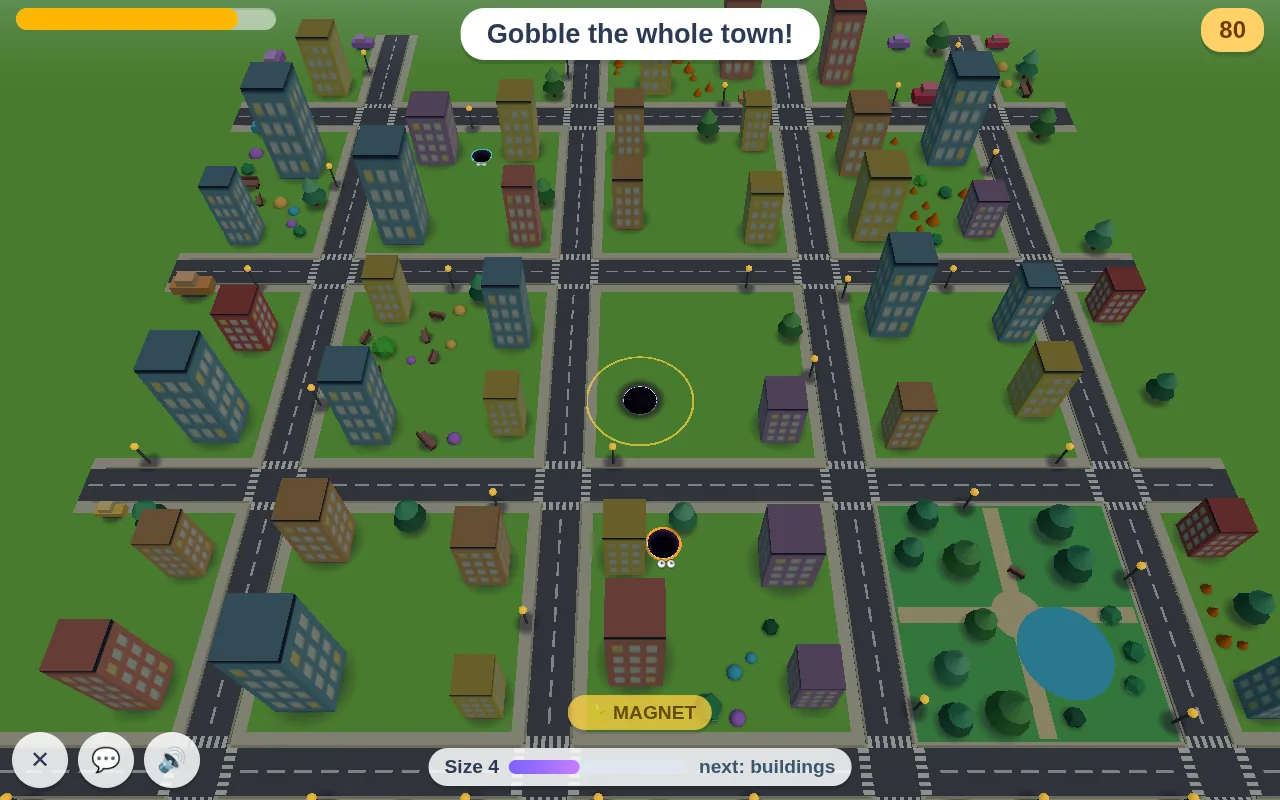
- A free-play mode. “Gobble the Town” has no lessons: eaten things stay gone, and the goal is to swallow as much of the town as you can before time runs out.
- Friendly rival holes. Two little holes with googly eyes roam nearby and eat snacks too. If you grow bigger than one, you can gobble it and it pops back up later. They can never eat you.
- Size levels. Each new kind of object you can eat is a level-up, with a chime and a spoken “Now you can eat cars!”
- Power-ups and a finale. A golden magnet star pulls nearby snacks into the hole, and the last 15 seconds are a “snack rush” where everything is a little easier to eat.
- Matching a rule. Eating only the things that match a rule comes from 1980s classroom games such as Number Munchers.
Design choices
- Gentle, not punishing. A wrong answer costs a little size and resets the combo, nothing more. There are no lives, no game-over screens and no timers that shout.
- Compare with yourself only. The results screen shows the child's own best for that subject on that tablet. There are no leaderboards and no comparisons between children.
- Grown-ups set the level. A hidden setup screen picks the subject, difficulty, round length and whether rivals appear. Adding a new lesson means editing one short file.
- Works on any screen. It fills the screen in landscape on a tablet or in portrait on a phone. On weak devices it quietly switches to simpler shadows to keep the frame rate up.
- Fast on weak hardware. The whole ground is a single repeating texture and only nearby objects are drawn, so the endless town runs about as fast as the old fixed one on a software-rendered test machine.
- Tested by machine. Automated checks play hundreds of rounds of every subject and difficulty to confirm that every tile is marked right or wrong correctly. That testing caught real bugs: an addition round that could freeze the game, and times-table decoys that were actually correct answers.
Built 2026 for home use. Screenshots only: the game is not available to play on this site.